

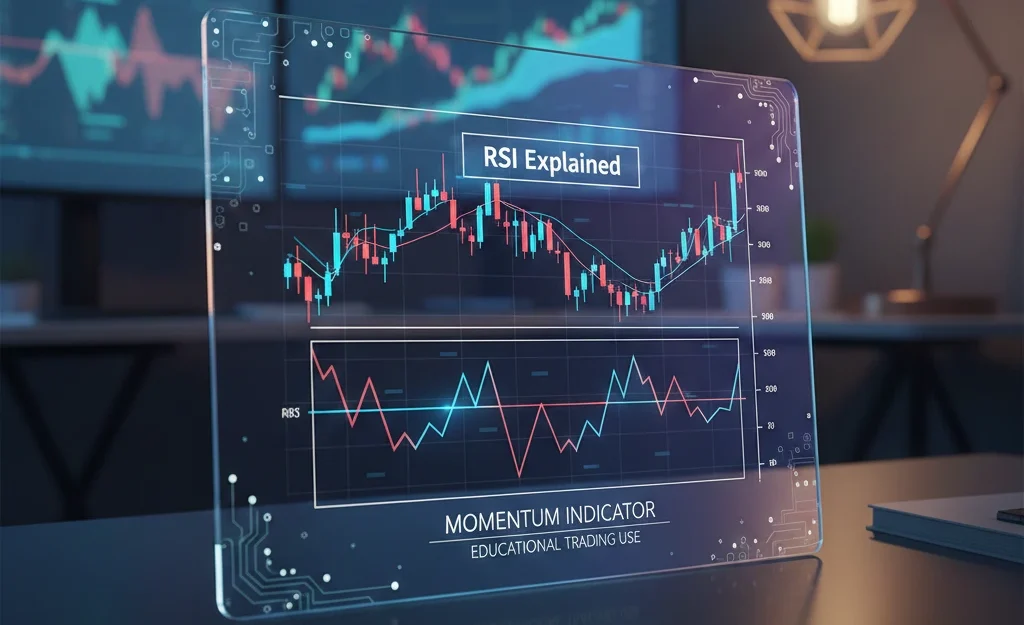
The Relative Strength Index (RSI) is a widely used technical indicator in trading education and market analysis. Despite its popularity, RSI is often misunderstood as a reversal signal. In reality, it measures momentum, describing the speed and magnitude of recent price changes over a defined period.
Strong trends can keep RSI in overbought or oversold territory for extended periods. Treating these levels as automatic triggers for action can lead to incorrect assumptions and inconsistent results.
RSI is most valuable when used as part of a broader framework rather than in isolation. Observing RSI alongside market conditions helps put readings in context, showing whether momentum is accelerating or slowing. Divergences between RSI and price can provide insight into potential momentum shifts, not guaranteed reversals. Combining RSI with market structure elements such as trendlines, support and resistance levels, or volatility frameworks provides additional context and structure, supporting a descriptive rather than predictive approach.
By understanding what RSI measures and using it alongside other information, traders can gain a clearer picture of market momentum without relying on it to forecast price movements.
This content is provided for educational purposes only and does not constitute financial advice, a recommendation, or an offer to buy or sell any financial instrument. Trading and investing involve risk, and past performance is not indicative of future results. Always ensure any trading activity aligns with your personal circumstances and risk tolerance.