
Understanding Oscillators
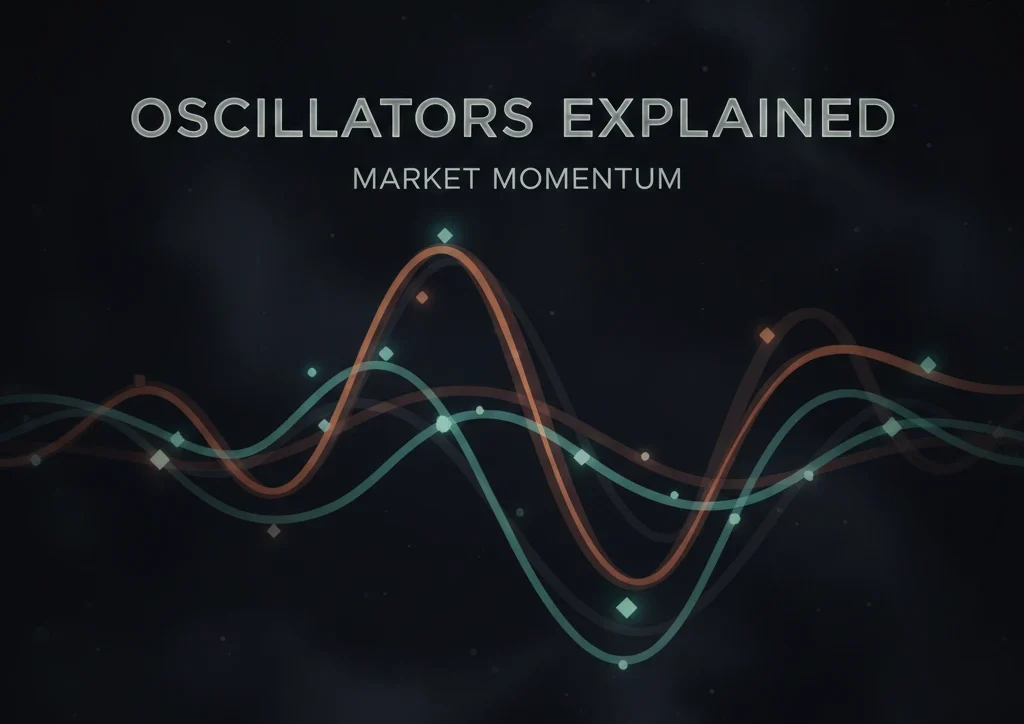
Oscillators are some of the most misunderstood tools in trading. Many traders approach them looking for “signals” or “predictions,” hoping they will tell them exactly when to enter or exit a trade. That’s not their purpose. Oscillators are descriptive tools, designed to show how price momentum behaves under different market conditions. Understanding them is less about predicting price and more about observing context.
Oscillators in Trending Markets
In a trending market, an oscillator highlights momentum strength or signs of exhaustion. A rising oscillator can confirm that momentum aligns with the trend, while divergences between price and oscillator may indicate that the trend is losing strength, not that it will immediately reverse. Used this way, oscillators help you measure the rhythm of a trend rather than chase signals.
Oscillators in Ranging Markets
In markets without a clear trend, oscillators become valuable for observing short-term balance points. They can reveal overextended conditions that may naturally revert, temporary imbalances in momentum, and zones where buyers and sellers are in relative agreement. Even here, the goal isn’t predicting the next swing. It’s about understanding where momentum is concentrated.
Observing Momentum, Not Predicting Moves
The most important principle is simple: oscillators describe, they don’t forecast. They show what the current momentum is doing, how it changes across timeframes or market conditions, and whether it aligns with the structure of the market. Focusing on description helps traders build a clearer, more objective view of the market and reduces emotional decision making.

The Role of Oscillators in Your Analysis
Oscillators are most effective when they are part of a disciplined, observational process. Their value comes from helping traders understand the market’s behaviour, whether it is trending or ranging, rather than telling them what price will do next. They are tools for insight, not prophecy.
If you want to explore how momentum indicators compare to other trend tools, check out our post on Momentum vs Trend Indicators Explained for Traders. Understanding the differences helps put oscillators in context and shows why no single tool predicts price — each gives insight into market behaviour.
This content is for educational purposes only and does not constitute financial advice. It is not a recommendation to buy, sell, or trade any financial instrument. Trading involves risk, and you should consider your own circumstances and seek independent advice if necessary. Past performance is not indicative of future results.